

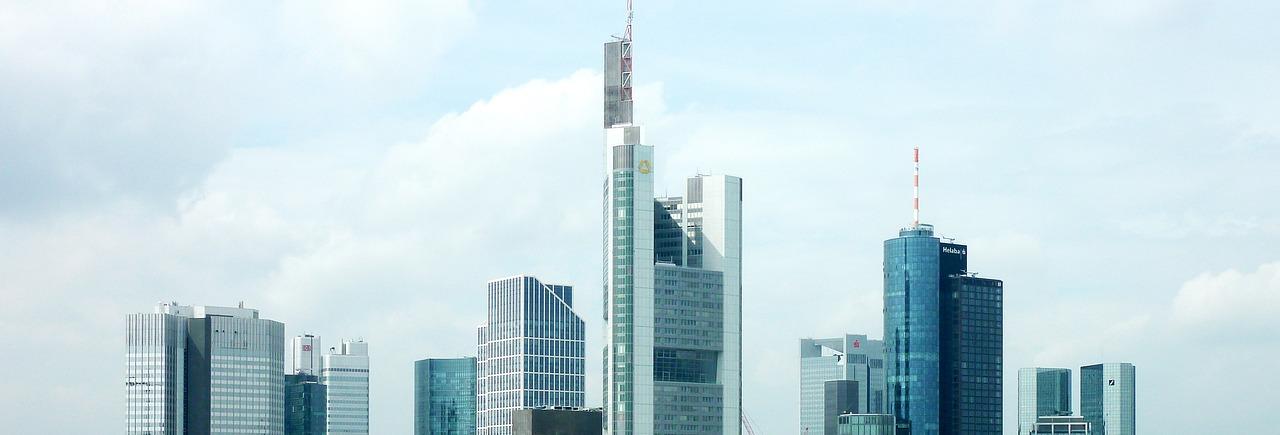
Business & Investment in Germany
Interested in doing business & Investment in Germany?
More than 40,000 companies in Germany are under foreign control and together employ approximately 4.7 million people (Federal Statistical Office, reporting year 2023, published in Dec. 2025). This demonstrates Germany’s position as a top location for investors. As the strongest economy in Europe and one of the largest markets worldwide, Germany offers excellent opportunities for investment in all economic areas. Germany’s climate for innovation, the comparatively flexible labor market with its highly qualified work force as well as the advanced infrastructure are only some of the factors contributing to the outstanding success of German enterprises and investors in Germany. Despite the current worldwide economic slump, Germany established its position as a robust international player. While these perspectives set the foundation for investment decisions in Germany, a carefully planned investment strategy and well-structured implementing procedures remain the key to success.
The S·K· Business & Investment Guide for Germany gives a useful overview with regard to company formation and business tax as well as employment regulations in Germany. By providing general background information, this booklet will serve as reference guide for your preliminary planning efforts.
Our booklet can be found here for download.
Checklists in English
If you have any questions about individual topics, please contact us via our contact form or send us an email.
Profit Taxation in Germany
Generally, all German resident companies and entrepreneurs with commercial activities in Germany are liable for taxation. There is only limited tax liability for non-resident companies. Depending on their organizational form, they may be liable to pay taxes on business activities conducted in Germany solely. We have compiled a guide that gives a useful overview with regard to business taxes and special rules for businesses on profit taxation in Germany by providing general information and covering the most important regulations, also for groups operating cross-border.
- The S·K· Profit Taxation Guide for Germany can be found here for download.
Expansion of foreign companies in Germany
If you want to expand to Germany as a foreign company, you can, for example, establish a domestic subsidiary, a branch office or a permanent establishment or representative office. In order to start the business activity in Germany, generally a business registration and, if necessary, a separate state permit are required.
I) Legal forms and foundation requirements
For expansion as a company based abroad, there are legally four forms of organization available to you in Germany. You can establish a domestic subsidiary, a branch office or a permanent establishment or representative office.
1) Domestic subsidiary
a) General
The subsidiary is a legally independent company in which the parent company holds a majority of the shares. A domestic subsidiary has its own legal personality independently of the foreign parent company. German law is applicable to the domestic subsidiary.
In particular, the following legal forms are available for you.
General partnership (OHG),
Limited partnership (KG) or limited partnership with a limited liability company as general partner (GmbH & Co. KG),
Limited liability company (GmbH),
Entrepreneurial company (UG haftungsbeschränkt), and
Joint stock company (AG).
The German legal provisions apply to the formation of the aforementioned companies. For example, an entry in the commercial register and a business registration are required.
b) Special example of the GmbH (limited liability company)
For foreign companies, the most popular legal form is probably the GmbH (limited liability company).
The GmbH needs a minimum share capital of at least EUR 25,000 (EUR 12,500 may be sufficient). For this, in practice, the GmbH needs a bank account in Germany. The liability of the GmbH is limited to the paid-up capital contribution. Prerequisite is the registration of the company in the Commercial Register.
You can establish a GmbH in Germany as well as buy an already existing so-called Vorrats-GmbH (shelf company).
The costs of establishing a limited liability company or taking over a stock limited liability company can amount to approximately EUR 2,500 to EUR 5,500 depending on time and effort.
c) Special example of the UG haftungsbeschränkt (Entrepreneurial company)
An entrepreneurial company (UG haftungsbeschränkt) can be established with less capital. It is a special form of the GmbH and also called "Mini-GmbH".
The foundation of the entrepreneurial company is possible with only EUR 1 share capital, but there is an obligation to build up equity until an amount of EUR 25,000. In principle, 25 % of the annual net profit (if any) must be allocated to a reserve (obligation to retain profits) until a capital of EUR 25,000 is reached.
This increase in the share capital can take place in two ways: Either by
1) a capital increase from additional contributions from existing or new shareholders paid into the company, or
2) a capital increase from company funds arising as a result of the retention.
In the case of conversion from company funds, this may only be carried out on the basis of audited annual financial statements in accordance with commercial law, which show equity of at least EUR 25,000.
Regardless of which method you choose, each form of capital increase requires notarization of the shareholders' resolution. After the capital increase to EUR 25,000 has been entered in the commercial register, the "UG" may be renamed "GmbH". This also needs to be entered in the commercial register.
2) Branch office
The German branch is part of the foreign company as a whole. This part is spatially and organizationally independent, but not legally. The branch does not have its own legal personality. It is therefore subject to the foreign corporate law of the head office. The decisive factor is the existence of a domestic organizational unit, which can continue as an independent company even without the head office abroad.
The business of the branch is required to be of a certain duration. The transactions must essentially correspond to those of the head office in particular, they must not be merely ancillary and execution transactions.
The branch has to be physically independent. For example, it needs its own bank account and separate accounting. It is not mandatory for the branch to have its own assets.
The branch must also be provided with personal independence. The manager of the branch must in principle be authorized to represent it independently in legal transactions.
The establishment of a branch office is effected by the actual process of its establishment. A business registration certificate and entry in the German Commercial Register are required. German law applies to the registration procedure.
3) Permanent establishment or representative office
A domestic permanent establishment is a branch or subsidiary of the foreign company as a whole, which is set up as a place of business but is dependent on the head office abroad. They constitute a dependent branch, which may not have a company name different from that of the head office. The permanent establishment carries out auxiliary business activities that serves to prepare, arrange or execute the main business of the foreign enterprise. There is no entry in the commercial register. However, each operating site must be registered with the responsible consumer protection office.
The term "representative office", which is occasionally used by foreign companies, does not exist in the German trade or commercial law and is an undefined legal term. Either the office of the foreign company in Germany itself is commercially active as part of its own organization, in which case it is a permanent establishment. This must be registered under trade law. Or an office is opened which is managed by an external and appropriately commissioned independent tradesman (for example, a commercial agent). In this case, there is no independent commercial activity of the foreign company in Germany.
Read the article Expansion of foreign companies in Germany by Julia Tytko
Employment and Labor in Germany
Our new Guide for International Employers
Germany offers foreign companies excellent conditions for recruiting highly qualified employees. At the same time, the German employment market comes with a high level of employee protection, complex regulations and comparatively high employment costs. For companies planning to hire employees in Germany or employ foreign workers, understanding the legal, tax and social security framework is essential. That is why we have published our new S·K· Guide “Employment and Labor in Germany”.
The guide provides a practical overview of the key issues international employers need to consider, from establishing an employment relationship to payroll and filing requirements.
Topics covered include:
Employment law and employee protection
Employment agreements and remuneration
Termination of employment relationships
Employment of foreign workers
Labor costs and social security contributions
Payroll procedures for German and foreign employers
Cross border employee assignments
A1 certificates
Wage tax and social security considerations
Permanent establishment issues
Filing requirements
With more than 40,000 companies in Germany under foreign control employing approximately 4.7 million people, international employment is an increasingly important topic (Federal Statistical Office, reporting year 2023, published in Dec. 2025). Our guide is designed as a practical reference for foreign companies, employers and HR professionals who want to understand the essentials of employment and labor in Germany.
We are happy to support international companies with their employment, payroll, tax and legal matters in Germany.
Frankfurt am Main, August 2026
Read or download the full S·K· Guide “Employment and Labor in Germany”:
Employment and Labor in Germany
We are looking forward to assisting you in doing business in Germany.
Contact options
-
Frankfurt am Main Phone +49 69 971 231-0.
You can send your request here by e-mail.
-
Dresden Phone +49 351 254 77-0.
You can send your request here by e-mail.